
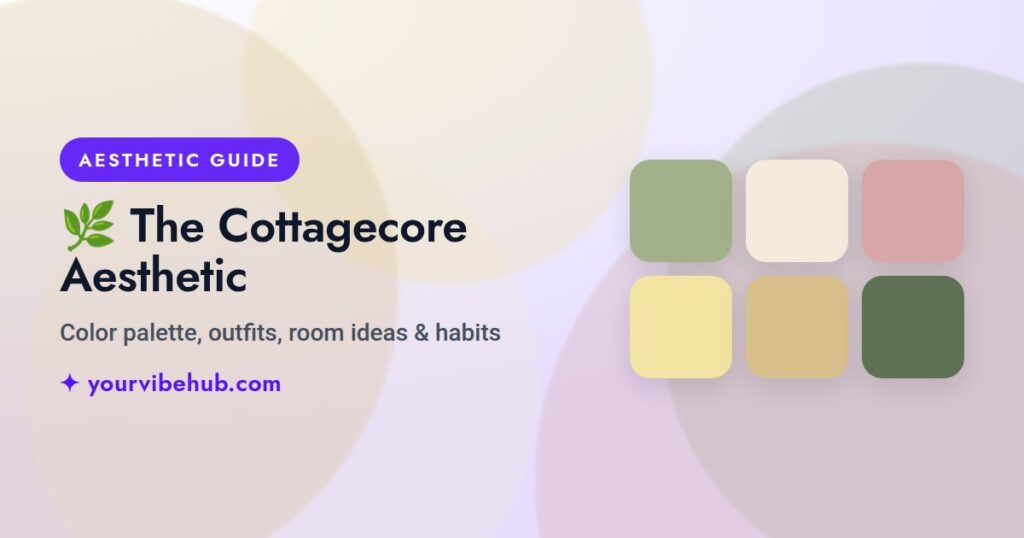
Cottagecore is the dream of a slower, softer life: a cottage with a garden, bread cooling on the windowsill, a basket of wildflowers and nowhere you have to be. It is one of the most loved aesthetics on Pinterest and TikTok because it is less about owning expensive things and more about making ordinary days feel gentle and handmade.
This guide covers where cottagecore came from, the colors and pieces that define it, how to decorate a room in the style, and the hobbies and rituals that make it a lifestyle rather than a costume. Not sure it is your vibe? Take our free aesthetic quiz first.
What Is the Cottagecore Aesthetic?
Cottagecore romanticizes simple country living and traditional skills. Visually, it is floral prints, linen, lace, gingham, puff sleeves, wicker baskets, dried herbs and soft natural light. As a lifestyle, it is baking, gardening, sewing, foraging, reading outdoors and writing letters. The core idea is slowness: doing things by hand, noticing the seasons and finding beauty in small, repeated rituals.
You do not need to live in the countryside. Plenty of cottagecore fans live in apartments and bring the feeling home with a windowsill herb garden, a vintage teapot and a Sunday baking habit.
Where Did Cottagecore Come From?
The word “cottagecore” started circulating on Tumblr around 2018, but the feeling behind it is much older. Poets and painters have romanticized country life for centuries, from pastoral poetry to the Romantic movement, and the 1970s back-to-the-land movement pushed a similar dream of self-sufficiency.
The aesthetic went mainstream in 2020. Stuck indoors, millions of people baked sourdough, planted gardens and dreamed about open fields, and cottagecore videos and boards exploded. Albums with a cozy, woodsy mood, like Taylor Swift’s folklore, helped carry the look into pop culture that same year.
The Cottagecore Color Palette
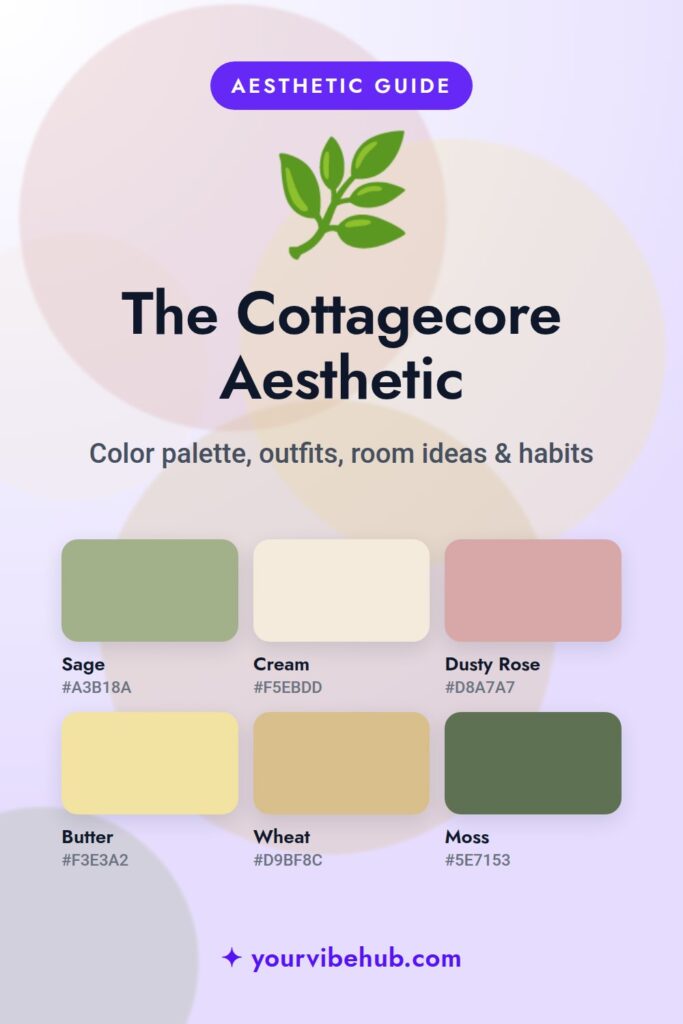
Cottagecore colors come straight from a garden: sage and moss greens, creamy whites, butter yellow, wheat and dusty rose. Keep bright neons and harsh blacks to a minimum and lean on natural, slightly faded tones.
Cottagecore Fashion: Key Pieces
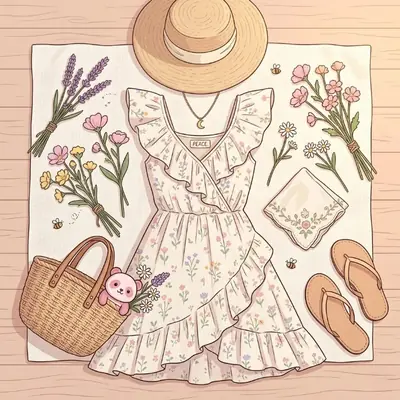
- Floral or gingham midi dresses, ideally in cotton or linen
- Puff-sleeve blouses and square necklines
- Knitted or crochet cardigans in cream, sage or butter yellow
- Pinafores and aprons layered over simple dresses
- Mary Janes, clogs or lace-up boots
- Straw hats, wicker baskets and hair ribbons
3 Easy Cottagecore Outfit Formulas
- Everyday: floral midi dress + cropped cardigan + Mary Janes + straw bag.
- Cool weather: linen blouse + long corduroy skirt + chunky knit + lace-up boots.
- Picnic: gingham top + high-waisted wide-leg trousers + ribbon in your hair + wicker basket.
Natural fabrics matter more than labels. Cotton, linen and wool look better as they age, and they are easy to find secondhand. Sewing or upcycling (adding lace trim, swapping buttons, dyeing with onion skins) is very on-brand.
Cottagecore Room Decor Ideas
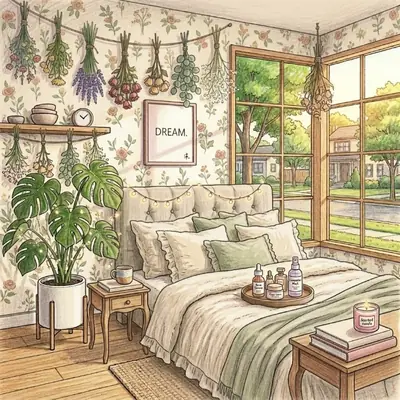
- Linen bedding layered with a quilt or crochet throw
- Dried flowers, wheat or lavender in jars and old bottles
- Vintage wooden furniture, painted dressers and wicker
- Botanical prints, pressed-flower frames and embroidery hoops
- Warm lamps with fabric shades instead of bright ceiling lights
- Open shelves with ceramics, teacups and cookbooks
- Plants: herbs on the windowsill, trailing ivy, a potted lemon tree if you have light
Want a personalized version? Our room aesthetic quiz shows which room style fits you best and what to buy first.
Cottagecore Hobbies and Rituals
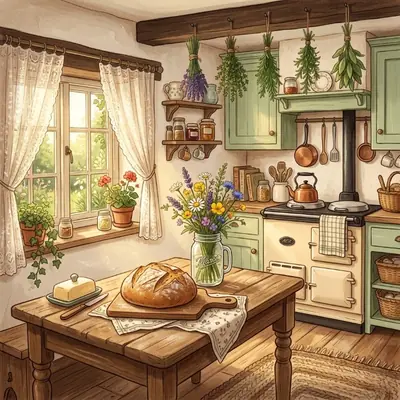
The heart of cottagecore is what you do with your time. Pick one or two of these and make them a weekly ritual:
- Baking bread or simple pastries on Sunday mornings
- Gardening, even with three pots on a balcony
- Pressing flowers and making cards or bookmarks
- Embroidery, knitting or mending clothes you already own
- Picnics with homemade food and a real blanket
- Letter writing with wax seals and pressed flowers
- Foraging walks: look, photograph and learn plants, but only eat anything wild if an expert has confirmed it is safe
Books, Films and Music With Cottagecore Energy
- Books: Anne of Green Gables by L. M. Montgomery, Little Women by Louisa May Alcott, The Secret Garden by Frances Hodgson Burnett
- Films: Pride & Prejudice (2005), Little Women (2019), Studio Ghibli’s My Neighbor Totoro and Kiki’s Delivery Service
- Music: soft folk and acoustic playlists: think Joni Mitchell, Fleet Foxes and Taylor Swift’s folklore and evermore
How to Do Cottagecore on a Budget
- Thrift first. Vintage shops and online resale are full of floral dresses, linen and old ceramics.
- Change the lighting. Swap cold-white bulbs for warm 2700K bulbs and add one fabric-shade lamp.
- Use what grows. Dry flowers and herbs from the garden or the supermarket bouquet you already bought.
- Learn one skill. Basic sewing or bread baking costs very little and changes how your home feels.
Cottagecore Makeup and Hair
Cottagecore beauty looks like you have just come in from the garden: fresh skin, rosy cheeks and soft, slightly undone hair. Keep the base light with a skin tint, add a cream blush in rose or peach to the apples of the cheeks and the nose, and finish with brushed-up brows and a tinted lip balm.
- Loose braids, milkmaid braids or a low bun with face-framing pieces
- Ribbons, scrunchies in cotton or linen, and dried-flower clips
- Soft waves from overnight braids instead of heat styling
- Nails kept short and natural, or a sheer pink polish
A Cottagecore Weekend Routine
Aesthetics stick when they become habits. Here is a simple slow weekend you can steal:
- Saturday morning: farmers’ market or a walk to buy flowers and bread.
- Saturday afternoon: bake something simple (scones, focaccia or a fruit crumble) with music on.
- Sunday morning: tea by the window, journal for ten minutes, water the plants.
- Sunday afternoon: one making project: pressing flowers, mending a shirt or writing a letter.
- Sunday evening: a picnic-style dinner, even on the living-room floor, and an early night with a book.
Sustainable Cottagecore
Cottagecore and sustainability fit together naturally. Buying secondhand, repairing clothes, growing a little food, shopping at local markets and choosing natural materials all reduce waste. The one trap is buying a whole new “cottagecore” wardrobe or room at once. Start with what you own and add slowly; the lived-in feel is the point.
Cottagecore vs. Similar Aesthetics
| Aesthetic | How it differs |
|---|---|
| Fairycore | More magical: fairy wings, mushrooms, glitter and forest mist. |
| Goblincore | Celebrates the “ugly” side of nature: moss, frogs, snails, rocks and mud. |
| Grandmacore | Cozy and nostalgic: knitting, floral armchairs, doilies and tea sets. |
| Soft Girl | Pastel and playful rather than rustic, with hair clips and blush. See our Soft Girl guide. |
Cottagecore FAQ
Is cottagecore still popular?
Yes. It peaked in 2020, but it has settled into a lasting style, especially in home decor, slow-living content and sustainable fashion. Its focus on handmade and secondhand items keeps it relevant.
Do I have to live in the countryside to be cottagecore?
Not at all. Cottagecore is about how you spend your time and how your space feels. A city apartment with plants, warm light, a vintage teapot and a baking habit is very cottagecore.
What is the difference between cottagecore and boho?
Boho mixes global, bohemian influences like macramé, rattan and bold patterns. Cottagecore is rooted in traditional European country life: florals, linen, lace and gardens. See our Boho guide.
Find Your Vibe
If this guide made you want to bake bread immediately, you might be cottagecore. Take the What’s Your Aesthetic? quiz to confirm it, or try the fashion aesthetic quiz to find the outfit style that suits you best.
Keep Exploring
More guides you might love, plus a two-minute quiz to name your vibe.
 The Light Academia Aesthetic Guide
 The Boho Aesthetic Guide
 Fall Aesthetic: Outfits, Decor & Bucket List